CEVI at Wine Paris 2026 – Meeting of the European wine sector and exchanges with CEVI members

img 8976 lighter

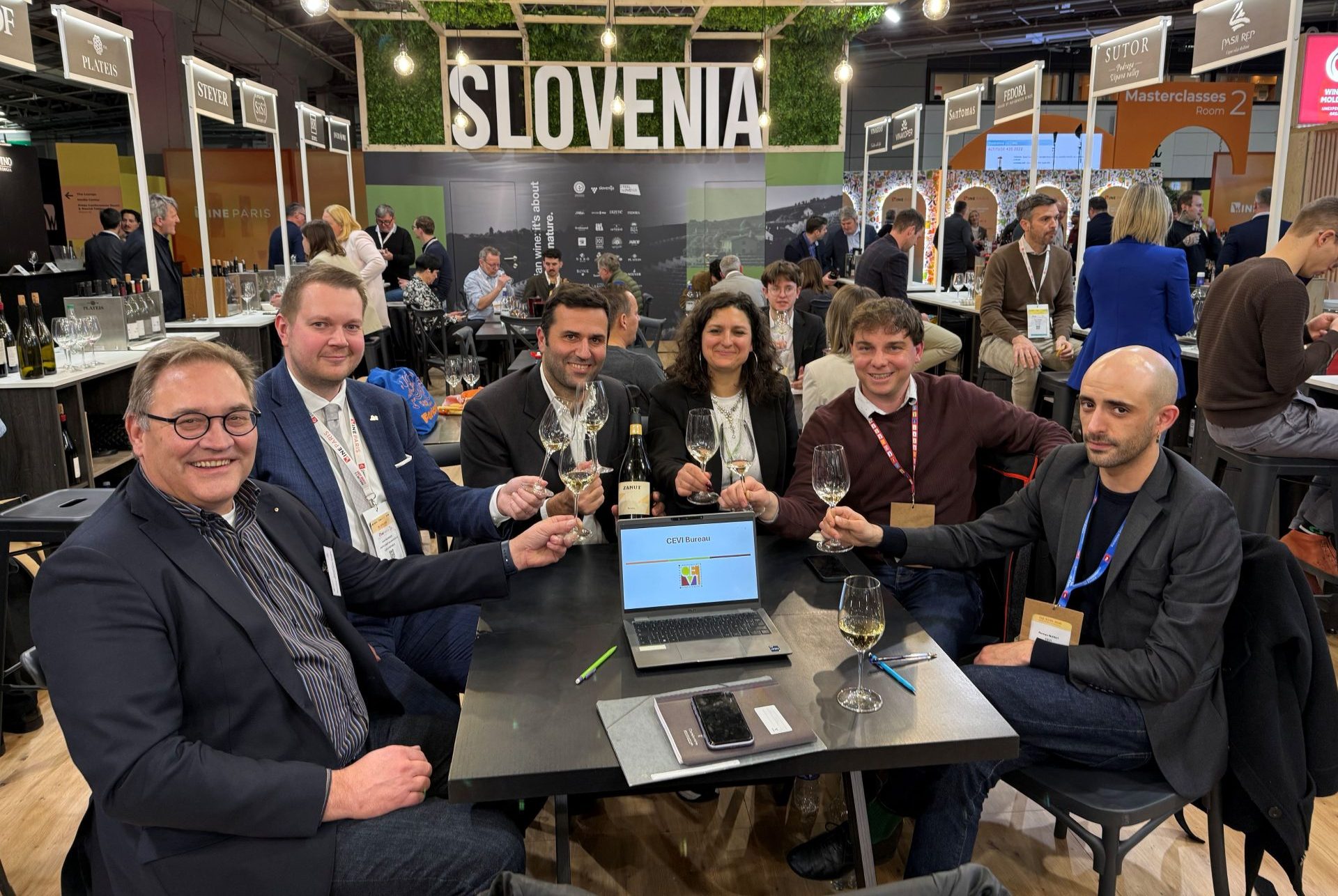
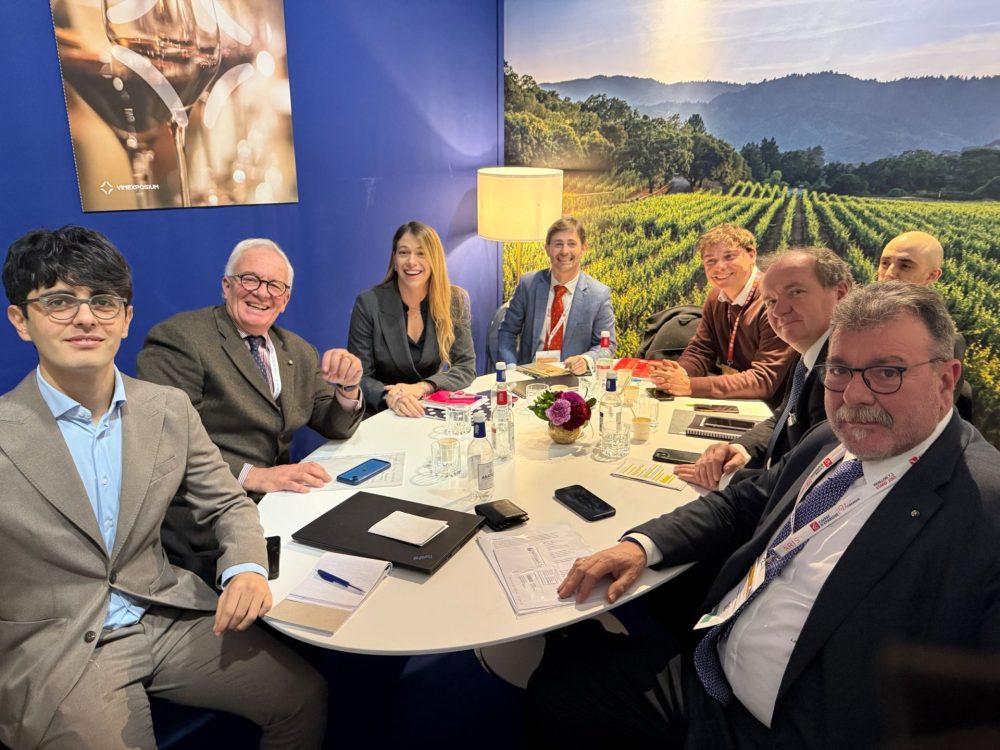
Guy Krier, Josef Valihrach, Ludovico Maria Botti, Mateja Škrl Kocijančič, Samuel Masse, Roman Moret

Events Published on 16 February 2026

CEVI at Wine Paris 2026 – Meeting of the European wine sector and exchanges with CEVI members

On the occasion of the 2026 edition of Wine Paris, CEVI, represented by its President Samuel Masse, held a series of meetings focused on advocacy for the wine sector and internal coordination.

The morning was dedicated to a working meeting with the main European wine organisations (CEEV, CEVI, Copa-Cogeca and EFOW) to define the sector’s strategic priorities for the year ahead.
img 8907 lighter
From left to right : Lorenzo Pagni (Copa-Cogeca), Riccardo Ricci Curbastro (EFOW), Marzia Varvaglione (CEEV), Ignacio Sánchez Recarte (CEEV), Samuel Masse, Roman Moret, Maxime Toubart (EFOW), Luca Rigotti (Copa-Cogeca)

On the CAP reform, CEVI reaffirmed, alongside the other organisations, the need to preserve a strong and common European framework, maintain a dedicated wine envelope, and safeguard the achievements secured through the Wine Package. The discussions showed a broad convergence among European representatives, paving the way for coordinated action towards the EU institutions in the coming weeks. On excise duties, a common approach is also emerging at European level in favour of simplifying the regime applicable to distance selling. CEVI welcomes this convergence, having consistently promoted this objective for more than fifteen years, and sees this collective momentum as a positive signal for further engagement with the European institutions.

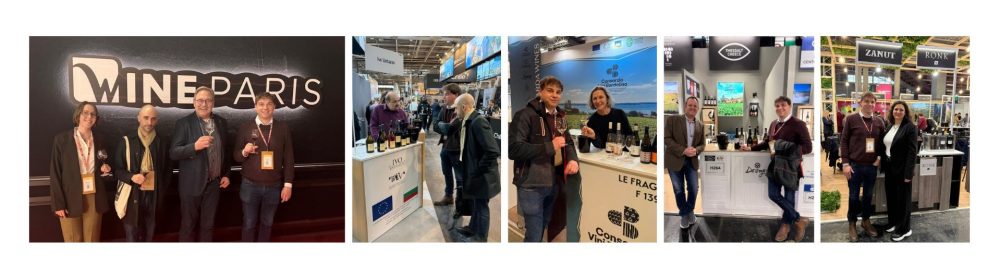
Following this meeting, Samuel Masse met with numerous representatives of CEVI member organisations exhibiting at the fair. These exchanges provided an opportunity to discuss developments in their national sectors and the situation of their estates, while highlighting the growing importance of Wine Paris as a key event for the profession.
design sans titre 1
Marie Arzur, Roman Moret, Guy Krier (Luxembourg), Samuel Masse ; Ivo Varbanov (Bulgaria) ; Mathilde Poggi (Italia), CEVI former CEVI president ; Thanos Dougos (Greece) ; Mateja Škrl Kocijančič (Slovenia)

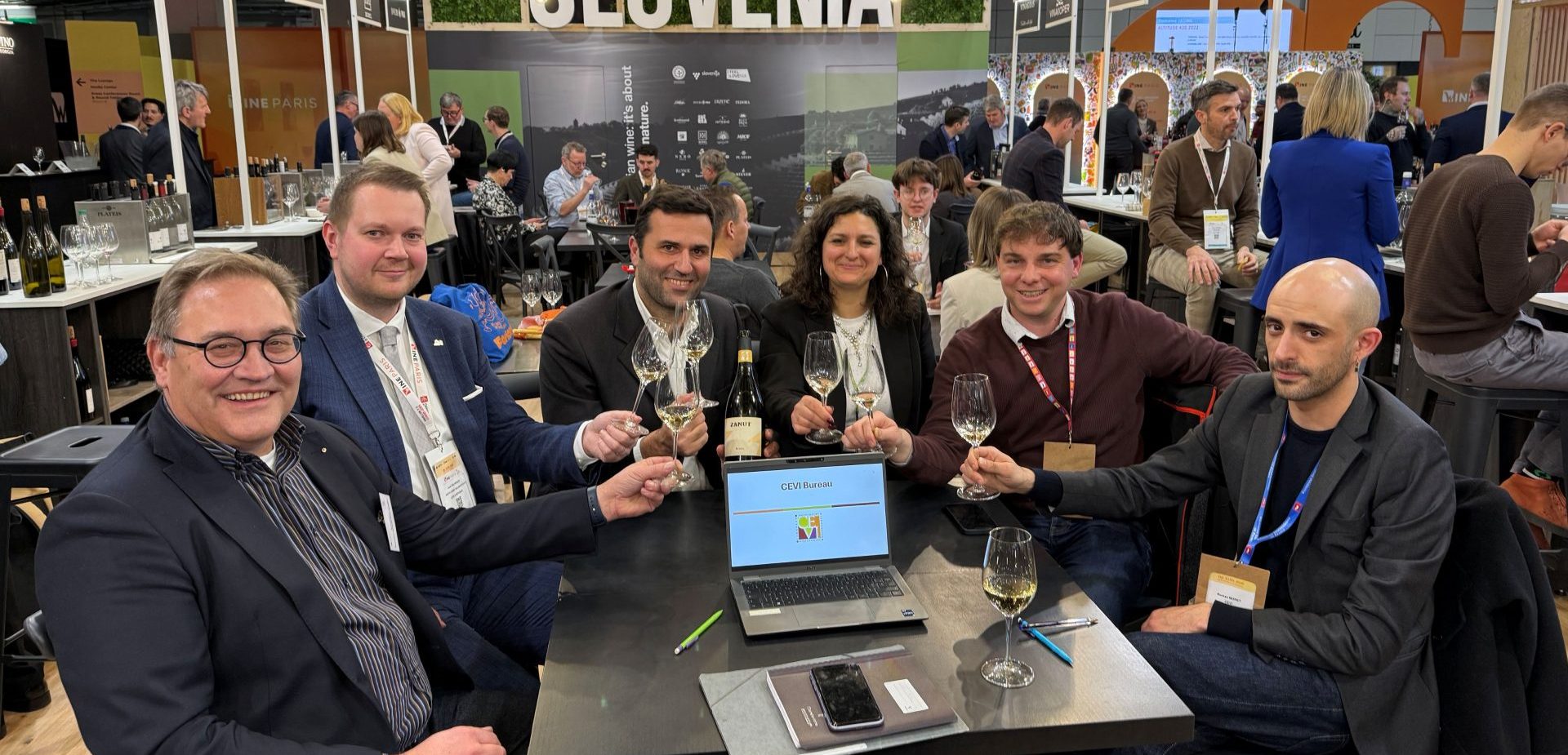
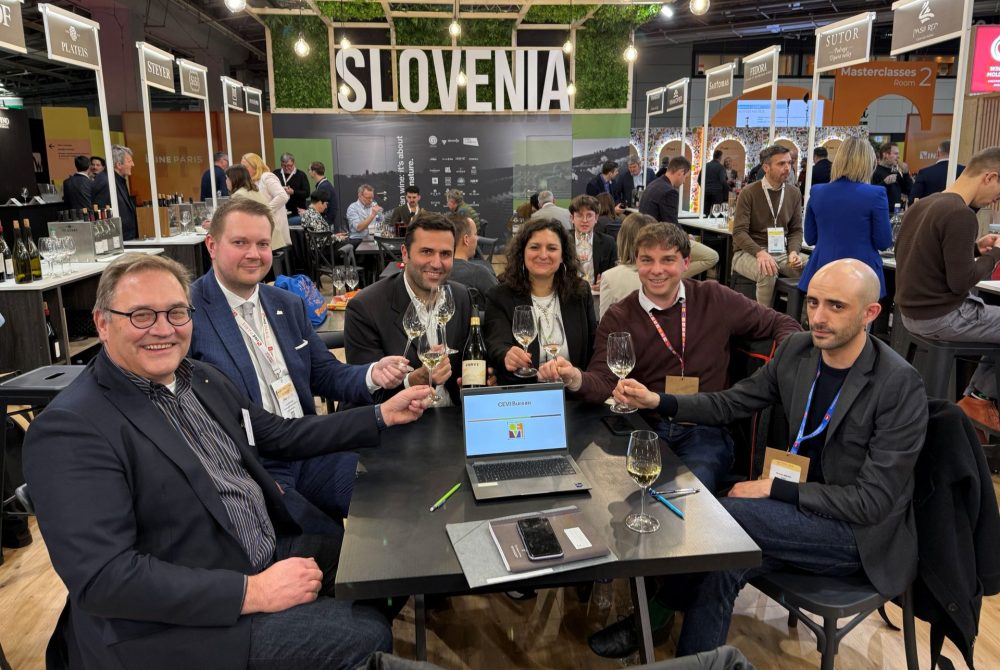
The day concluded with a meeting of the CEVI Bureau on the Family Estate Slovenia’s stand, during which members reviewed the morning’s discussions and the priority files for the beginning of the year: CAP reform, preparations for the General Assembly in Portugal, the upcoming “Statutes” working group, and ongoing reflections on our vision of the “Independent Winegrower”.

Wine Paris 2026 thus combined European sector coordination, exchanges with members and internal CEVI work. In a context marked by geopolitical tensions, structural challenges for the sector and ongoing regulatory developments, these discussions reaffirmed the importance of collective and structured action at European level.
img 8976 lighter
Guy Krier, Josef Valihrach, Ludovico Maria Botti, Mateja Škrl Kocijančič, Samuel Masse, Roman Moret

Wine Package adopted – Progress for wine SMEs, but structural choices still raise concerns

lukas s dybocdncvx4 unsplash

News Published on 10 February 2026

Wine Package adopted – Progress for wine SMEs, but structural choices still raise concerns

On Tuesday 10 February, the European Parliament proceeded with the final vote on the Wine legislative Package. While the text remains imperfect and does not meet all the expectations of European Independent Winegrowers, it does represent a step forward, introducing tangible improvements to the existing legislative framework without disrupting the fragile balance of the sector.

CEVI would like to thank the European Commissioner for Agriculture, Christophe Hansen, as well as the services of the European Commission, for having launched the High-Level Group (HLG) on wine. The conclusions of the HLG served as the basis for the development of the Wine Package, with the aim of providing responses to the crisis currently affecting the sector. CEVI also welcomes the role played by the rapporteur, Esther Herranz Garcia, together with the shadow rapporteurs and the Members of the European Parliament sitting on the Agriculture Committee, whose work significantly improved the initial proposal by better reflecting the realities of family-run and artisanal wine businesses, which lie at the heart of the Independent Winegrowers’ model.

At the same time, the final text reflects an overall orientation that raises concerns. Particular emphasis is placed on industrial products such as (partially) de-alcoholised wines, alongside a reinforcement of trends towards massification of production and concentration of actors within the sector, notably through the growing role of Producer Organisations. Such approaches appear ill-suited to a sector where value creation is based on diversity, territorial anchoring and artisanal know-how, and, above all, raise concerns about a preferential allocation of support to these structures.

That said, CEVI acknowledges the progress achieved on key priorities for the enterprises it represents, in particular with regard to promotion in third countries, improved access to this measure for small producers, and strengthened support for wine tourism. These tools are essential to support the diversification and development of Independent Winegrowers’ companies.

Furthermore, CEVI welcomes the strengthening of the crisis management toolbox made available to Member States, notably through the introduction of a grubbing-up measure, which is essential to address the current tensions affecting the sector. CEVI also very positively welcomes the permanent establishment of the planting authorisation system, a cornerstone of the stability of the European vineyard, as well as the extension of replanting authorisations, which provide greater flexibility and predictability for European winegrowers.

As underlined by Samuel Masse, President of CEVI: “If the wine package does not fulfil all the objectives set out by the HLG, it provides a necessary response to the situation currently facing European viticulture. Thanks to the work of the European Parliament, the final text better reflects the reality of family-run and artisanal wine SMEs represented by Independent Winegrowers, in particular as regards promotion and support for wine tourism. Preserving the diversity of models, terroirs and artisanal know-how remains essential to securing the future of European viticulture and wine-producing regions.”