FIVI, the Italian member of CEVI, took part this week in Vinitaly, the international wine and spirits exhibition held in Verona. The event provided an ideal opportunity to showcase the Independent Winegrower model while highlighting the concrete achievements resulting from CEVI’s advocacy at European level.
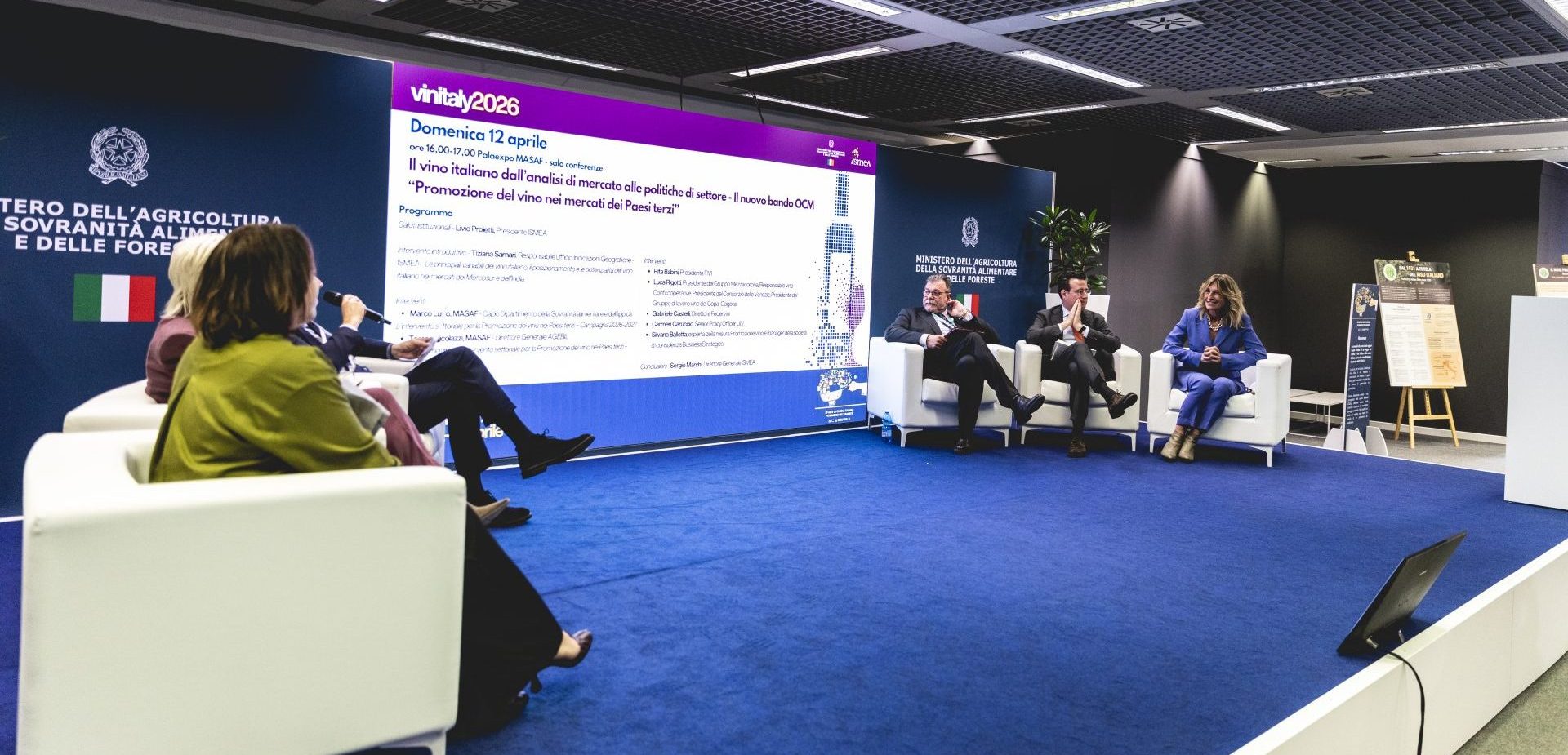
Vinitaly 2026 – Fivi highlights the specificities of the Independent Winegrower model
On 12 April, during a conference organised by the Institute of Services for the Agricultural and Food Market (ISMEA), FIVI President Rita Babini highlighted a key development stemming from the Wine Package: the requirement for Member States to ensure access to the “third-country promotion” measure for small producers. This provision has already been swiftly implemented by the Italian authorities, reflecting the work carried out by FIVI. It also illustrates CEVI’s broader efforts to make European wine policy more inclusive and better suited to small independent structures. This remains essential, as in Italy only 13% of Independent Winegrowers currently benefit from this support measure.
During the exhibition, FIVI also presented its study “Growth Choices and Financial Management in Vertically Integrated Wineries”, conducted by SDA Bocconi School of Management with the support of the Romeo and Enrica Invernizzi Foundation and Crédit Agricole Italia. Set against a backdrop of climate change, shifting consumption patterns and market volatility, the study examines the economic and financial model of vertically integrated estates operating “from vineyard to bottle”.
The research highlights two key findings. First, the critical role of working capital in vertically integrated wineries: long production cycles, combined with the timing gap between revenues and expenses, create liquidity pressures that require careful financial management. Second, beyond purely financial considerations, external growth is primarily driven by the search for expertise, market access and strategic positioning. Overall, the findings confirm the strength of a sustainable development model economically, environmentally and socially, built on the Independent Winegrower’s control over their business and generating significant positive externalities for local territories.
“The overall picture emerging from the research confirms that Independent Winegrower businesses are deeply rooted in the land and in production, far removed from speculative approaches. They invest their resources in their wineries and vineyards and make limited use of credit instruments, although smaller enterprises may still face certain challenges,” concluded Rita Babini.